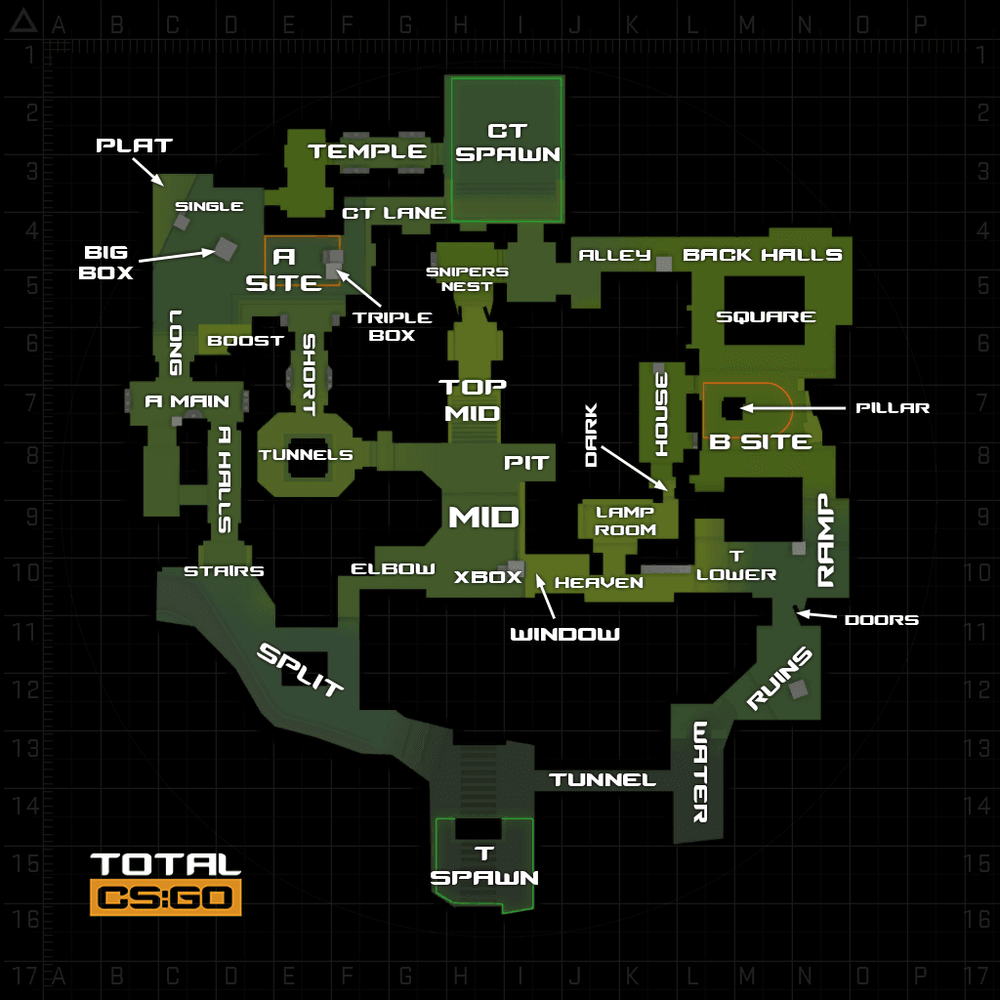
Mastering the Map: A Comprehensive Guide to CS:GO Callouts
In the competitive landscape of CS:GO, understanding the intricacies of callouts is essential for effective team communication and tactical gameplay. This comprehensive guide will explore the various callouts used across the different maps in the game, ensuring that players can navigate seamlessly and make strategic decisions based on their positioning and the enemy's location. A well-versed player should become familiar with key callouts on maps such as Dust II, Mirage, and Inferno, as these are commonly played in both casual and competitive matches.
To further enhance your proficiency in callouts, it’s crucial to categorize them by map and practice regularly with your team. Here are some essential callouts to start with:
- Dust II: Long A, Catwalk, B Site
- Mirage: A Site, Balcony, Jungle
- Inferno: Banana, Pit, Site
Familiarity with these key locations not only boosts your own gameplay but also contributes to a more coordinated team strategy. Mastering the map through effective use of callouts will ultimately enhance your chances of victory.
Counter-Strike is a highly competitive first-person shooter game where teams of terrorists and counter-terrorists battle to complete objectives or eliminate each other. One of the most iconic maps in the game is Inferno, known for its intricate layout and strategic depth. Players often rely on inferno callouts to communicate effectively and coordinate their tactics during intense matches.
Top 10 Essential Callouts Every CS:GO Player Should Know
In the fast-paced world of CS:GO, communication is key to winning matches. One of the most effective ways to ensure your team stays informed and coordinated is through essential callouts. These are specific terms used to describe locations, threats, and strategies, allowing players to convey critical information quickly. In this article, we will explore the top 10 essential callouts every CS:GO player should know, helping improve your gameplay and the synergy of your team.
- Long A: This is a common callout for players on the map Dust II, referring to the long corridor leading to the A site. It's crucial to call out enemy movements and positions in this area.
- Catwalk: Another important callout from Dust II, 'Catwalk' refers to the raised area on the way to A site, where players can get the drop on their enemies.
- Middle: This callout is used to indicate the center area of most maps, allowing teammates to strategize around the crucial control of the middle ground.
- Banana: On the map Inferno, 'Banana' refers to the pathway leading from the T-side spawn to the B site, making knowledge of this callout vital for both offensive and defensive play.
- Site: The term indicates the bomb planting area, commonly followed by 'A' or 'B' to specify which site you're referring to.
- Tetris: Also on Dust II, this term refers to the stacks of boxes near the A site, which is a common spot for players to take cover.
- Spawn: This callout is important as it tells teammates where the players are likely to come from, particularly at the start of a round.
- Flank: Signifying the need to be aware of enemy players coming from behind, this callout is essential for maintaining map control.
- Peeking: Players will use this term when attempting to gain information or engage enemies while minimizing exposure.
- Push: Indicating aggression, this callout tells your teammates that it’s time to move forward and take control of areas on the map.
Mastering these essential callouts can significantly enhance team communication in CS:GO. Familiarity with these terms not only accelerates in-game decision-making but also fosters greater teamwork. Remember, effective communication can often be the difference between victory and defeat, so make sure you and your teammates are on the same page!
How Do Callouts Improve Team Communication in CS:GO?
In Counter-Strike: Global Offensive (CS:GO), effective communication is crucial for team success. One of the most powerful tools for enhancing this communication is the use of callouts. Callouts serve as standardized terms for specific locations on the map, allowing players to convey information quickly and efficiently. By adopting a set of common callouts, teams can drastically reduce the time it takes to share critical information, such as enemy positions or strategic plans. For example, when a player spots an enemy at 'A Site,' calling out 'Enemy A' instantly informs the team of the threat without confusion.
Furthermore, the implementation of callouts enhances teamwork by fostering a shared understanding of the map among team members. This shared vocabulary not only aids in clarity but also improves coordination during gameplay. When team members are familiar with the same callouts, they can execute strategies more effectively, as everyone knows exactly where to go and what to expect. In high-pressure situations, where every second counts, having a clear and concise communication method can mean the difference between victory and defeat, making callouts an essential aspect of team communication in CS:GO.