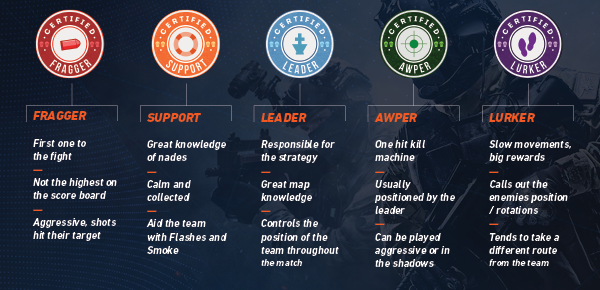
Understanding the Lurker Role: Key Strategies for Dominating CS:GO
In Counter-Strike: Global Offensive (CS:GO), the role of a lurker is crucial for gaining strategic advantages over your opponents. A lurker is typically a player who operates on the periphery of the team, focusing on flanking or ambushing the enemy. This independent playstyle requires not only a sharp tactical mind but also an acute awareness of the game's mechanics and flow. To excel as a lurker, players should develop strong map knowledge, understanding common hiding spots and rotation timings. Additionally, mastering communication with teammates about enemy positions can significantly enhance your team's performance.
Here are some key strategies for dominating as a lurker in CS:GO:
- Map Control: Always be aware of your surroundings, utilize sound cues, and take advantage of off angles to surprise your enemies.
- Timing: Choose the right moment to strike. Wait for distractions caused by your teammates or for the enemies to overextend.
- Communication: Keep your team updated on enemy movements without revealing your own position.
By implementing these strategies, you can master the lurker role and greatly impact your team's success in CS:GO.
Counter-Strike is a popular series of multiplayer first-person shooter games that focus on team-based gameplay, where players assume the roles of either terrorists or counter-terrorists. Players can enhance their experience by engaging in various in-game activities such as opening cases to obtain unique skins and equipment. The competitive nature and strategic depth of Counter-Strike have made it a staple in the esports community, attracting millions of players worldwide.
The Art of Flanking: Tips for Effective Lurking in CS:GO
In the tactical world of CS:GO, mastering the art of flanking can turn the tide of a match in your favor. Flanking involves positioning yourself strategically to approach the enemy from an unexpected direction, catching them off guard and disrupting their flow. To achieve this effectively, always communicate with your teammates, ensuring that your maneuvers align with their actions. Use the map to your advantage by remembering key choke points and enemy positions. Timing is crucial; wait for the right moment when the enemy is occupied or distracted, and then initiate your flank to maximize impact.
Here are some essential tips for effective lurking in CS:GO:
- Be aware of sound: Utilize the sound mechanics of the game to move silently and listen for enemy footsteps.
- Utilize smokes and flashes: Create distractions with throwables to blind or confuse your opponents, making your flanking approach smoother.
- Stay unpredictable: Change your routes and patterns regularly to keep enemies guessing and prevent them from anticipating your next move.
Lurking vs. Entry Fragging: What's the Difference and When to Use Each?
Lurking and entry fragging are two distinct strategies used in first-person shooter (FPS) games, each with its own unique advantages and scenarios for use. Lurking involves a player taking a stealthy role, staying hidden or out of sight while waiting for the right moment to strike. This approach allows for unexpected ambushes, which can catch opponents off guard and lead to crucial kills. On the other hand, entry fragging is an aggressive tactic where a player leads the charge into combat, aiming to secure the first kill as they enter an area. The entry fragger sets the pace for the team, creating opportunities for follow-up players and momentum during engagements.
Understanding when to use lurking versus entry fragging can significantly impact your team's performance. Generally, lurking is more advantageous in scenarios where stealth and surprise can turn the tide, such as on defense or when flanking opponents. In contrast, entry fragging is best employed during coordinated attacks, where quick engagements are critical to overwhelming the enemy. Knowing your role and adapting your strategy according to the game situation can maximize effectiveness and lead to victory.